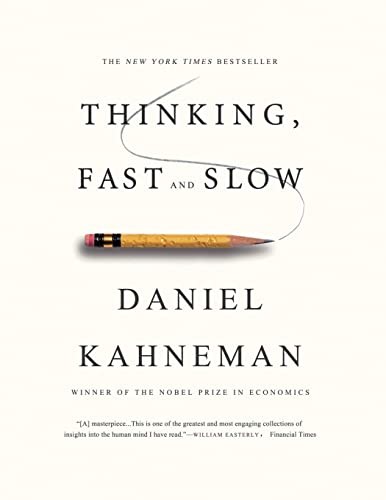
Second nonfiction book I’ve let onto this blog, and it happened almost by accident, someone recommended it after I mentioned Behave and I figured I’d already broken the seal. Kahneman’s whole frame is two systems, one fast and automatic and intuitive, one slow and effortful and deliberate, and most of the book is a tour of the places where system one quietly makes a call that system two never gets asked to check. It’s a genuinely useful mental model, I’ve caught myself mid decision more than once since finishing this, going “wait, is this a system one moment,” which I realize sounds insufferable to say out loud.
The chapters on the experiencing self versus the remembering self are the ones that stuck hardest, this idea that we don’t actually remember experiences, we remember a story about them, weighted heavily toward the peak and the ending, and that this remembering self is who actually makes future decisions, not the self who lived through the thing. That reframed a few of my own memories in a way I wasn’t expecting from a book about cognitive biases. The stuff on loss aversion and anchoring is more familiar territory if you’ve read anything in this genre before, Kahneman himself basically invented the field so it’s not his fault it’s been repeated everywhere since, but it means those middle chapters cover ground I already half knew.
Where this loses a star for me, and I don’t think I’m alone here, is length and density in the back half. It’s a big book, and past the two-thirds mark it starts repeating its own structure, another bias, another experiment, another chapter, and I found myself reading in shorter and shorter sessions just to keep absorbing it instead of skimming. Worth every session though. Four stars, and yes, I do think about the peak-end rule more than is probably healthy now.